
Zora Health / Employer guide / Australia
Support employees through fertility treatment, and keep the talent you have invested in.
Fertility treatment rarely fits around a work calendar, and most employees go through it quietly, often while doing some of their best work. Zora Health helps you build practical fertility support, from policies and manager guidance to confidential care navigation and access to 128+ partner clinics in 16 countries, around your workforce and budget. Companies including Hilton, LinkedIn, Sanofi, HSBC, Mastercard, Carousell and Singapore Management University work with us.
Book an employer consultation Explore the cost calculator
Five things Australia HR leaders should know
- About 1 in 16 Australian babies is born through IVF. Clinics ran 104,721 assisted reproduction cycles in 2024.
- Almost 2 in 5 employees going through fertility treatment left or considered leaving their job, in a 2025 Ferring survey of five countries including Australia.
- Medicare pays part of IVF, but a first cycle still costs about A$6,700 or more out of pocket. Elective egg freezing gets no Medicare rebate.
- There is no statutory fertility leave. Unions proposed 10 paid days of reproductive leave in March 2026, and some employers already give 5 to 10 days.
- Single women and same-sex couples can use treatment. Single women and female same-sex couples account for about 1 in 5 cycles in Australia and New Zealand, so write eligibility for every family type.
Why fertility is a business problem for employers
Fertility treatment does not fit around a work calendar. A clinic sets the date of a scan the day before. Egg collection happens when the body is ready, usually about 36 hours after a final trigger injection. Then comes a two-week wait, and for many couples, another cycle. Your team feels it: missed meetings, unexplained absences, a strong performer who suddenly goes quiet.
Most employees hide treatment because they fear being seen as less committed. That is why the cost stays invisible in your reports. It shows up instead as:
- Resignations. Almost 2 in 5 employees going through fertility treatment left or considered leaving their job, according to a 2025 Ferring survey of five countries including Australia, reported by The Canberra Times.
- No clear time off. Across the five countries in that survey, including Australia, 60% of employees with fertility challenges said they had no clear entitlement to time off for appointments, and 67% said their workplace offered no support (HRD Australia).
- Lower performance. 55% of 5,000 people surveyed in Canada, India, Mexico, the UK and the US for Carrot’s 2023 Global Fertility at Work report said fertility challenges hurt their work performance.
- Unequal treatment. A Victorian employee can use free public fertility care. A colleague in Queensland in the same role pays thousands of dollars out of pocket for the same cycle. One benefits budget lands very differently across states.
What employers gain
Keep the people you spent the most to develop
Replacing an employee costs one-half to two times their annual salary, according to Gallup. The average woman using her own eggs in an IVF cycle in Australia and New Zealand in 2024 was 36 (ANZARD), and 28% of Australian mothers are now 35 or older (AIHW). Treatment lands in the years when employees are most experienced. A written policy, paid time off and a funded allowance can help address barriers that contribute to employee attrition.
Stand out in a tight labour market
73% of employees with fertility challenges in Ferring’s 2025 five-country survey said they would be attracted to a role that offers fertility support, and 65% of people in Carrot’s 2023 five-country survey said they would change jobs for fertility benefits. Westpac has given a week of paid fertility leave a year since 2022, Gallagher Bassett gives up to 10 paid days of reproductive health leave, and the Queensland public sector gives 10 paid days that cover IVF. Candidates can compare.
Make fertility support financially predictable
A fertility benefit does not need to mean unlimited medical coverage. Employers can set annual or lifetime allowances, decide which treatments qualify, and provide guidance and education so employees understand their options before they spend.
Zora helps employers structure benefits around local treatment costs, Medicare and state support, and workforce needs, so HR can run the programme within an agreed budget. The allowance can be designed to apply after Medicare rebates, so it covers the gap employees actually pay.
Want to see what this would look like for your Australia workforce?
What IVF costs, and what the state pays
Medicare pays 75% of the schedule fee for in-hospital services such as egg collection and 85% for outpatient services such as scans and blood tests (federal rapid review, 2025). Clinic fees sit well above the schedule fee, so the gap is large. Once an employee’s out-of-pocket costs pass the Extended Medicare Safety Net threshold of A$2,699.10 in 2026 (A$861.20 for concession holders), Medicare pays more of the rest.
| Item | Clinic fee | What the patient pays after Medicare |
|---|---|---|
| First IVF cycle, IVF Australia | Varies by package | A$6,711.65 (June 2025) |
| First IVF cycle, Monash IVF Queensland | A$12,827 (fees as at 1 July 2024) | About A$6,700 to A$8,900, before hospital and drug costs |
| Elective egg freezing, Monash IVF Queensland | A$5,075 | A$5,075. No Medicare rebate. |
Sources: Department of Health, rapid review of ART regulation, 2025 and the Monash IVF Queensland fee page. Fees vary by clinic and state.
| Item | Public support | What the employee still carries |
|---|---|---|
| Medicare | Rebates for treatment of clinical infertility, under a definition updated in August 2024 so that single women and same-sex couples who need donor eggs or sperm may qualify when their specialist judges it clinically relevant | The gap between clinic fees and rebates. Elective egg freezing in full. |
| Victoria public fertility care | Free for most patients: Victorian residents with a Medicare card, egg age 42 or under, 2 stimulated cycles in a lifetime | Any cycles beyond the limit, and private care |
| NSW Fertility Treatment Rebate | A$2,000 once, for families on Family Tax Benefit, holding a Health Care Card, or with household income of A$116,000 or less | The rest of the bill. Most professionals miss the income test. |
| Private health insurance | Assisted reproduction must be included only in Gold hospital cover, and pays only for in-hospital costs | Consultations, tests and drugs, and a 12-month waiting period |
| Time off for appointments | No statutory fertility leave | Annual leave or personal leave |
Sources: MBS Online, changes to the definition of infertility, Department of Health Victoria, Service NSW and privatehealth.gov.au.
Age is one of the strongest predictors of IVF success, alongside individual medical and treatment factors. In 2024, 31.4% of fresh egg collection cycles in Australia and New Zealand led to a live birth for women under 30, against 6.3% for women aged 40 to 44.
The ANZARD 2024 report from UNSW puts the rate at 28.7% for women aged 30 to 34 and 19.0% for women aged 35 to 39. Of women who started treatment in 2021 and 2022, 37.4% had a baby from their first complete cycle and 57.6% by their sixth. Many need more than one cycle, which is why the size of an allowance, and when employees can use it, matter as much as whether you offer one.
Give Employees Access to Fertility Specialists Across Asia
Help employees navigate fertility care with access to doctors and clinics, treatment information, and clear guidance on IVF, egg freezing and other fertility options. Employees can explore their options privately, without needing to go through HR.
Fertility clinics in Australia on the Zora app include Adora Fertility Surry Hills, Adora Fertility Melbourne and Adora Fertility Brisbane.
Fertility support that fits your workforce and budget
You do not need to overhaul your existing health insurance to support employees through fertility treatment. Start with awareness and manager education, add confidential one-to-one support, or introduce a funded allowance across your offices. There is no minimum company size.
Where included in the employer programme, eligible employees can use talks and care navigation without paying Zora a separate fee. Care navigation allowances are set in each proposal. Treatment and other third-party costs are paid separately, either by employees or through the fertility allowance their employer provides.
Companies starting the conversation
Essentials
Expert-led talks for employees and managers, fertility and menopause policy templates, manager guides and full access to the Zora app. Up to 2 talks a year.
Employees supported one to one
Navigation
Everything in Essentials, plus confidential one-to-one care navigation and access to our partner clinic network.
Large teams across Asia
Complete
Everything in Navigation, plus quarterly anonymised reporting, a dedicated account manager and scheduled review meetings with HR.
Optional add-ons can be added to any programme, subject to availability: hormone and fertility diagnostics and telehealth with specialists. Pricing is tailored to your headcount, your countries and the services you choose. Most companies start with a single talk.
Request a proposal See how Zora works for employers
Comparing fertility benefit providers? Use our RFP question bank
Most RFP templates were written for the US. Ours has 40 questions written for Asia, with why each one matters, what a good answer looks like and a scoring sheet for three providers. Six of the questions for Australia:
- Which states can our employees use the programme in, and which clinics in each?
- How does the programme support employees without a Medicare card?
- How does an employer benefit sit alongside Medicare rebates, the Extended Medicare Safety Net and state programmes such as Victoria public fertility care?
- Does eligibility cover single employees and same-sex couples?
- Do you require an infertility diagnosis before support starts?
- What individual-level data does HR see?
Your download link appears here as soon as you submit. Zora Health may contact you about employee benefits; see our privacy policy.
Plan your fertility benefit budget
Fertility benefit budget planner
Model the annual claims budget for a fertility allowance. Change any number.
This is a claims budget, not a Zora quotation. Zora’s programme fees, implementation and optional services are separate.
Illustration only. Utilisation is an editable assumption, not observed Zora data. The calculation assumes each user claims their full annual allowance, and excludes programme fees and setup costs. For a tailored model, request an employer proposal.
Estimate the potential workforce impact of fertility challenges
A rough planning scenario. It applies a global infertility estimate to your headcount, so it is not a prediction for your workforce, a measured loss or a forecast of savings from any programme.
Range: A$413,417 to A$1,169,667 a year, depending on replacement cost.
Assumptions: infertility affects about 1 in 6 adults (World Health Organization, 2023), applied to employees aged 25 to 44. Replacing an employee costs one-half to two times their annual salary (Gallup, 2019); the headline uses the low end. Absence is valued at salary divided by 250 working days. Exit rate and days lost are your own assumptions.
This is a hypothetical cost scenario, not a prediction of actual employee departures, an estimate of Zora’s financial impact or a guaranteed saving from fertility benefits.
Already have corporate health insurance? Here is where Zora fits
Your medical plan may cover some consultations and tests, but fertility treatment is often limited or excluded, so check your policy wording. Employees still need to understand their options, the public funding they qualify for and which clinic suits them.
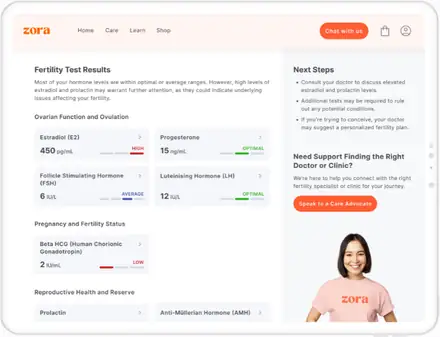
Zora works alongside your existing insurance and benefits. We help employees get reliable information, navigate their care options and reach suitable specialists, and we give HR manager guidance, policy templates and, on the Complete programme, anonymised reporting. You strengthen fertility support without replacing your medical plan.
How Zora works
For your employees
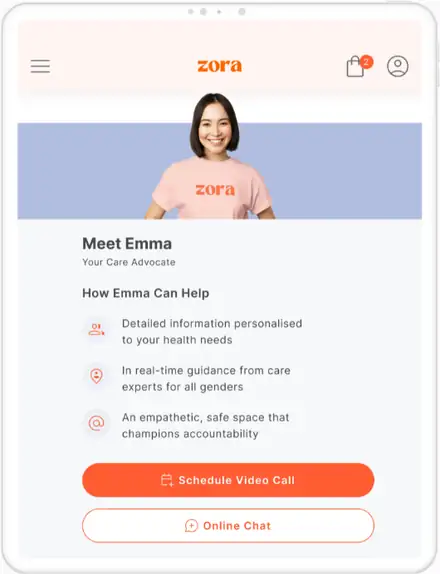
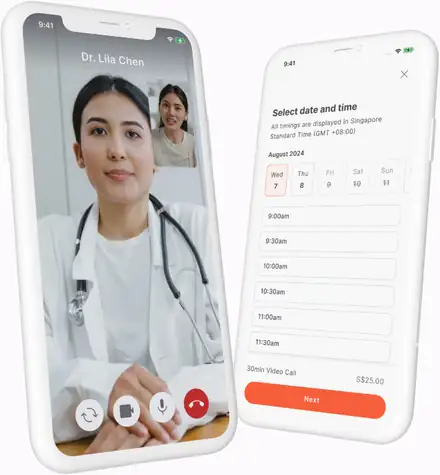
Employees join the Zora app with a company code, or single sign-on for larger teams. They can learn about fertility and egg freezing, understand what your benefit covers, book a confidential care navigation call and find partner clinics and specialists.
For HR
- Kick-off, week 1. Agree goals, countries and which employees are eligible.
- Policy and benefit design, weeks 2 to 4. Draft or update your fertility policy using our templates.
- Launch, typically weeks 4 to 6. A launch talk for employees and managers, plus a communications pack for HR to send.
- Live support. Employees book care navigation calls and use the Zora app.
- Reporting, every 3 months, on the Complete programme. Anonymised usage, common themes and our recommendations, reviewed with your account manager.
Privacy
Employee privacy is central to our programmes. On the Complete programme, routine employer reports contain aggregated engagement and utilisation information, with safeguards to prevent identification of individual employees. On every programme, personal health information is not included in standard HR reporting, and employees can get help without telling their manager. Where eligibility checks or claims administration need individual-level data, access is limited to authorised parties for defined purposes, as agreed in writing before launch. Employee data is handled in line with Singapore’s Personal Data Protection Act and Australia’s Privacy Act 1988, which treats health information as sensitive information.
Clinics and doctors in Australia
Zora’s directory lists 56 clinics and 241 doctors in Australia. Locations include Sydney, Melbourne and Perth. Of these clinics, 51 list IVF and 46 list egg freezing.
Employees can browse clinics in Australia, see IVF clinics and find a doctor in Australia on the Zora app. The directory is for information only and is not an endorsement. See Zora’s employer guides for every country.
Rules and eligibility in Australia
Who can use assisted reproduction
Each state regulates assisted reproduction, and the Northern Territory, which has no ART Act, relies on national NHMRC guidelines (Page Provan). In Victoria, clinics cannot refuse treatment because of relationship status, gender identity or intersex status (VARTA). Single women and female same-sex couples account for about 1 in 5 cycles in Australia and New Zealand.
How long eggs and embryos can be stored
Victoria allows 10 years for eggs and sperm and 5 years for embryos, plus extensions. In NSW and the ACT the clinic sets the limit, and Western Australia allows up to 10 years (Page Provan). In 2024, 7,388 cycles in Australia and New Zealand froze eggs, and 36.5% of fertility preservation cycles were for non-medical reasons (ANZARD).
Clinic regulation is changing
Clinic incidents in 2025 prompted a national review, and the Australian Commission on Safety and Quality in Health Care is now building an independent national accreditation scheme, with draft standards piloted from January 2027 and all providers moved onto it by December 2028 (ACSQHC, 2026). Victoria’s Parliament passed amendments to its ART Act in July 2026 (Hansard), giving the Department of Health stronger powers over clinic registration and inspection. Ask any provider how it checks clinic accreditation.
Parental leave and flexible work
Government Paid Parental Leave is 26 weeks for births from 1 July 2026, with superannuation paid on it. Since 6 June 2023, pregnant employees, parents of school-age or younger children and carers with at least 12 months’ service can request flexible work, the employer must reply in writing within 21 days, and the Fair Work Commission can settle disputes (Avant). Miscarriage is covered by 2 days of compassionate leave.
No statutory fertility leave
The ACTU proposed 10 days of paid reproductive leave in March 2026; the government has not committed to it. The Sex Discrimination Act protects pregnancy and potential pregnancy, relationship status and family responsibilities. Since December 2022, employers have had a positive duty to eliminate sex discrimination, sexual harassment and related conduct as far as possible, and since December 2023 the Australian Human Rights Commission has been able to enforce it.
Surrogacy
Surrogacy law varies by state and territory, but all allow altruistic surrogacy and ban commercial surrogacy; the ACT, NSW and Queensland also bar residents from paid arrangements overseas (surrogacy.gov.au). Intended parents seek a parentage order under their state’s law. The ALRC’s national review is due to be tabled by 18 November 2026 (ALRC, 2026). Intended parents cannot take NES unpaid parental leave but may get Parental Leave Pay (Fair Work Ombudsman).
Why employers choose Zora
Companies including Hilton, LinkedIn, Sanofi, HSBC, Mastercard, Carousell and Singapore Management University work with Zora Health. We work alongside your existing insurance, helping employees use the cover they already have and find suitable specialists based on their needs.
Trying to conceive with a heavy workload took a toll on my husband and me. It helped us understand our options.
Questions HR teams ask us
Is fertility leave mandatory in Australia?
No. There is no statutory fertility or IVF leave. Employees use annual or personal leave unless their employer offers more, and miscarriage is covered by 2 days of compassionate leave.
Does Medicare cover egg freezing?
Not when it is elective. Medicare rebates apply to treatment of clinical infertility, so an employee freezing eggs for non-medical reasons pays the full cost.
Can single employees and same-sex couples use a fertility benefit?
Yes. Single women and same-sex couples can access treatment, and since August 2024 they may qualify for Medicare rebates when their specialist judges it clinically relevant. Write your policy so every family type can use it.
Does Zora replace our health insurance?
No. Zora works alongside your insurance. We help employees understand their options, find suitable specialists and use the cover they already have.
How much does a fertility benefit cost an employer?
It depends on the allowance, eligibility and expected uptake. Use the budget planner on this page for a first estimate, then ask us for a tailored proposal based on your headcount and countries.
How quickly can we launch?
Typically 4 to 6 weeks from contract to launch, depending on scope and countries. Most companies start with a single talk.
Related guides for Australia employers
Build a fertility benefit for your team
Whether you are introducing fertility benefits for the first time or improving an existing programme, tell us your headcount, countries and priorities. We will come back within two working days with suitable services, an indicative budget and a practical rollout plan for your Australia team. No obligation.
Not ready to talk yet? Explore how Zora works
Sources
- Australian Bureau of Statistics, Births, Australia 2024
- AIHW, Australia’s mothers and babies
- UNSW NPESU, ANZARD 2024 annual report, August 2026
- NPESU via Medianet, more diverse families created through IVF, September 2025
- The Canberra Times, fertility leave and work, December 2025
- HRD Australia, the cost of ignoring fertility
- Department of Health, rapid review of ART and IVF regulation and accreditation, 2025
- Services Australia, Medicare Safety Net thresholds
- MBS Online, changes to the definition of infertility, 2025
- Department of Health Victoria, public fertility care services
- Service NSW, Fertility Treatment Rebate-2 program
- NSW Health, affordable IVF
- privatehealth.gov.au, product tiers
- Monash IVF, IVF costs in Queensland
- VARTA, legislation and guidelines
- Victorian Government, storage of embryos, eggs and sperm
- Page Provan, storage periods
- Victorian Government, stronger protections for Victorians accessing IVF, June 2026
- Services Australia, Parental Leave Pay
- Fair Work Ombudsman, maternity and parental leave
- Fair Work Ombudsman, compassionate and bereavement leave
- Avant, changes to flexible working requests, June 2023
- ACTU, 10 days paid reproductive leave, March 2026
- Queensland Government, reproductive health leave, 2024
- Australian Human Rights Commission, Sex Discrimination Act 1984
- OAIC, employee records exemption
- Westpac, fertility leave, November 2022
- HRD Australia, Gallagher Bassett reproductive health leave, 2024
- Ferring Pharmaceuticals, Fertility Matters at Work and This Can Happen, workplace fertility survey, November 2025
- Carrot Fertility, Global Fertility at Work report, 2023
- Australian Government, surrogacy.gov.au, Surrogacy laws in Australia
- Australian Law Reform Commission, Review of Surrogacy Laws, 2026
- Fair Work Ombudsman, Parental leave and surrogacy arrangements
- Australian Commission on Safety and Quality in Health Care, Assisted reproductive technology standards, May 2026
- Office of the Australian Information Commissioner, What is personal information?
- Gallup, This fixable problem costs US businesses $1 trillion, 2019
- Parliament of Victoria, Hansard, Health Legislation Amendment (Regulatory Reform) Bill 2026, July 2026
- Australian Human Rights Commission, positive duty
- World Health Organization, 1 in 6 people globally affected by infertility, April 2023
Information on this page is correct as of 5 November 2026. Laws, public funding, insurance rules and treatment costs change often, so check current rules with the relevant authority, insurer or a qualified adviser before making decisions. This page is general information, not legal, financial, tax or medical advice.