
Zora Health / Employer guide / Romania
Support employees through fertility treatment, and keep the talent you have invested in.
Fertility treatment rarely fits around a work calendar, and most employees go through it quietly, often while doing some of their best work. Zora Health helps you build practical fertility support, from policies and manager guidance to confidential care navigation and access to 128+ partner clinics in 16 countries, around your workforce and budget. Companies including Hilton, LinkedIn, Sanofi, HSBC, Mastercard, Carousell and Singapore Management University work with us.
Book an employer consultation Explore the cost calculator
Five things Romanian HR leaders should know
- Romania’s total fertility rate fell to 1.39 in 2024 from 1.54 in 2023 (Eurostat); 145,700 live births were registered in 2025 (INS).
- The Ministry of Labour’s IVF programme for 2026 to 2030 gives RON 15,000 in vouchers, up to 3 times, to couples or single women where the woman is 24 to 42.
- Since 2019, the Labour Code has given female employees having IVF 3 days of extra paid leave a year: 1 for egg retrieval and 2 from embryo transfer.
- Romania has no comprehensive assisted reproduction law. The Civil Code allows donor treatment for a man and a woman or a single woman; surrogacy is unregulated.
- A private IVF cycle in Bucharest costs about RON 13,000 to 18,000, depending on protocol.
Why fertility is a business problem for employers
Fertility treatment does not fit around a work calendar. A clinic sets the date of a scan the day before. Egg collection happens when the body is ready, usually about 36 hours after a final trigger injection. Then comes a two-week wait, and for many couples, another cycle. Your team feels it: missed meetings, unexplained absences, a strong performer who suddenly goes quiet.
The World Health Organization estimates that about 1 in 6 people worldwide are affected by infertility, and the patient groups SOS Infertilitatea and Declic estimate that 1 in 5 couples of reproductive age in Romania are affected (G4Media, April 2024). In a 2023 Carrot Fertility survey of 5,000 people in Canada, India, Mexico, the UK and the US, 79% felt uncomfortable discussing fertility at work.
- Resignations. 39% of employees with fertility challenges in Ferring‘s 2025 survey of more than 3,600 people in Australia, France, Japan, Poland and the UK had left or considered leaving their job during treatment.
- Funding that stops and starts. Applications for state IVF vouchers were halted in 2024 when funding was not approved (G4Media, April 2024). The 2025 budget of RON 100 million covered more than 6,600 families, less than needed, the Labour Minister said (Puterea, September 2025).
What employers gain
Keep the people you spent the most to develop
Replacing an employee costs one-half to two times their annual salary, according to Gallup. Romania had the EU’s second-largest gender employment gap in 2025, 18.7 points (Economedia, citing Eurostat), and women had their first child at 27.2 on average in 2024 (G4Media, citing Eurostat). A written policy, paid time off and a funded allowance help keep women in work through treatment.
Stand out in a tight labour market
In the Carrot survey, 65% said they would change jobs for an employer with fertility benefits. In 2022, Kellogg Romania announced 5 paid days off, up to 3 times a year, for employees in fertility treatment or whose partner is, on top of the statutory 3 days (Financial Intelligence, April 2022). In 2024, Merck Romania described a fertility benefit that covers treatment costs for employees and their partners, with counselling (Revista Cariere, November 2024).
Make fertility support financially predictable
Aon projected that private medical costs paid by companies and insurers in Romania would rise by 15% in 2026, against a European average of 8.2% (Economedia, citing Aon, October 2025), so a fixed annual or lifetime allowance is easier to budget than open-ended cover.
Zora helps employers structure benefits around local treatment costs and the state and city voucher programmes, within an agreed budget.
Want to see what this would look like for your Romanian workforce?
What IVF costs, and what the state pays
The earlier Ministry of Health subprogramme paid RON 10,000 per IVF procedure for insured women aged 24 to 40 (National Transplant Agency, 2022). Since December 2022 the family ministry, now the Ministry of Labour, has issued RON 15,000 in vouchers (Actual de Cluj, 2022). Government Decision 264/2026, approved on 23 April 2026, extended this to 2030, with 2026 applications open from 17 August to 15 November (Stiri pe surse). The government expects about 10,000 beneficiaries a year (Digi24, April 2026).
| Item | Private price (RON) | Notes |
|---|---|---|
| Full IVF cycle, private clinics in Bucharest | about 13,000 to 18,000 | Embryos clinic lists a full IVF package at 16,490 (bucharest.ro) |
| Classic IVF with embryo transfer | 14,215 | MedLife standard price |
| IVF with ICSI | 16,250 | MedLife; a mixed IVF and ICSI package is 14,900 |
| Frozen embryo transfer | 4,670 | Per transfer |
| Egg retrieval and freezing | 12,200 | Elective; 8,120 before cancer treatment |
| Egg or embryo storage | 1,760 | Per 12 months |
| IVF with donor eggs | 13,350 | Including transfer |
| PGT-A genetic testing | 15,385 | Plus 3,080 per embryo biopsy |
| Intrauterine insemination (IUI) | 1,690 | One procedure |
Sources: MedLife IVF price list, 2026; bucharest.ro, April 2026. MedLife lists standard prices without promotions and does not say whether drugs are included; prices vary by clinic and city.
| Item | Public support (or own savings) | What the employee still carries |
|---|---|---|
| National IVF programme 2026 to 2030 | RON 10,000 for procedures and RON 5,000 for drugs, at partner clinics; woman 24 to 42; up to 3 times, within annual funds | ICSI, genetic testing, storage and extra transfers |
| Bucharest City Hall, FIV3 (ASSMB) | Up to RON 15,000 for up to 2,000 Bucharest residents, woman 20 to 45, July 2025 to December 2026 | The rest of the cycle; applicants must not have had similar public funding before |
| Bucharest Sector 2, 2026 to 2028 (proposed June 2026) | Up to RON 20,000 for 50 residents a year, woman 24 to 42, net income up to RON 11,400 a month for a couple or RON 5,700 for a single woman | The rest of the cycle |
| Cluj and other cities | We found no current Cluj programme | The full private price |
| Women over 42, and couples with no Romanian citizen | No public support | The full private price |
Sources: Programme rules, Government Decision 264/2026 and Order 684/2026 (copy published by România TV); Stiri pe surse, July 2025; DGASPC Sector 2, June 2026; Wall-Street.ro, October 2025. We found no tax relief for IVF costs in Romania.
Age strongly predicts IVF success. Romania publishes no national IVF results by age; in Germany’s national registry, the birth rate per fresh embryo transfer in 2023 was 30.9% for women aged 30 to 34, 26.3% at 35 and 9.3% at 41 to 44 (Deutsches IVF-Register, Jahrbuch 2024).
An employee in her late 30s may not have time to wait for the next voucher round, so when employees can use an allowance matters as much as its size.
Give Employees Access to Fertility Specialists
Help employees navigate fertility care with access to doctors and clinics, treatment information, and clear guidance on IVF, egg freezing and other fertility options. Employees can explore their options privately, without needing to go through HR.
Fertility support that fits your workforce and budget
You do not need to overhaul your existing health insurance to support employees through fertility treatment. Start with awareness and manager education, add confidential one-to-one support, or introduce a funded allowance across your offices. There is no minimum company size.
Where included in the employer programme, eligible employees can use talks and care navigation without paying Zora a separate fee. Care navigation allowances are set in each proposal. Treatment and other third-party costs are paid separately, either by employees or through the fertility allowance their employer provides.
Companies starting the conversation
Essentials
Expert-led talks for employees and managers, fertility and menopause policy templates, manager guides and full access to the Zora app. Up to 2 talks a year.
Employees supported one to one
Navigation
Everything in Essentials, plus confidential one-to-one care navigation and access to our partner clinic network.
Large and multi-country teams
Complete
Everything in Navigation, plus quarterly anonymised reporting, a dedicated account manager and scheduled review meetings with HR.
Optional add-ons can be added to any programme, subject to availability: hormone and fertility diagnostics and telehealth with specialists. Pricing is tailored to your headcount, your countries and the services you choose. Most companies start with a single talk.
Request a proposal See how Zora works for employers
Comparing fertility benefit providers? Use our RFP question bank
Our RFP question bank has 40 questions, with why each one matters, what a good answer looks like and a scoring sheet for three providers. Six of the questions for Romania:
- Are local-plan employees covered, or only staff on international health plans?
- Do you require an infertility diagnosis before support starts?
- How does the allowance sit alongside the RON 15,000 national vouchers and city programmes such as Bucharest’s FIV3, so employees use public funding first and claim ICSI, genetic testing, drugs and storage from the allowance?
- Can employees who do not qualify for the vouchers, such as women over 42, non-Romanian staff or those choosing elective egg freezing, use the benefit, and how do you handle requests where Romanian law is unclear, such as surrogacy?
- Which clinics in Bucharest, Cluj-Napoca, Iași, Timișoara and other cities do you work with, and which are partners of the national programme?
- How do you handle health data as special category data under the GDPR and Law 190/2018, and what will the employer see when an employee requests IVF leave or an allowance?
Your download link appears here as soon as you submit. Zora Health may contact you about employee benefits; see our privacy policy.
Plan your fertility benefit budget
Fertility benefit budget planner
Model the annual claims budget for a fertility allowance. Change any number.
This is a claims budget, not a Zora quotation. Zora’s programme fees, implementation and optional services are separate.
Illustration only. Utilisation is an editable assumption, not observed Zora data. The calculation assumes each user claims their full annual allowance, and excludes programme fees and setup costs. For a tailored model, request an employer proposal.
Estimate the potential workforce impact of fertility challenges
A rough planning scenario. It applies a global infertility estimate to your headcount, so it is not a prediction for your workforce, a measured loss or a forecast of savings from any programme.
Range: RON 563,750 to RON 1,595,000 a year, depending on replacement cost.
Assumptions: infertility affects about 1 in 6 adults (World Health Organization, 2023), applied to employees aged 25 to 44. Replacing an employee costs one-half to two times their annual salary (Gallup, 2019); the headline uses the low end. Absence is valued at salary divided by 250 working days. Exit rate and days lost are your own assumptions.
This is a hypothetical cost scenario, not a prediction of actual employee departures, an estimate of Zora’s financial impact or a guaranteed saving from fertility benefits.
Already have corporate health insurance? Here is where Zora fits
Your medical plan may cover some consultations and tests, but fertility treatment is often limited or excluded, so check your policy wording. Employees still need to understand their options, the public funding they qualify for and which clinic suits them.
Zora works alongside your existing insurance and benefits. We help employees get reliable information, navigate their care options and reach suitable specialists, and we give HR manager guidance, policy templates and, on the Complete programme, anonymised reporting. You strengthen fertility support without replacing your medical plan.
How Zora works
For your employees
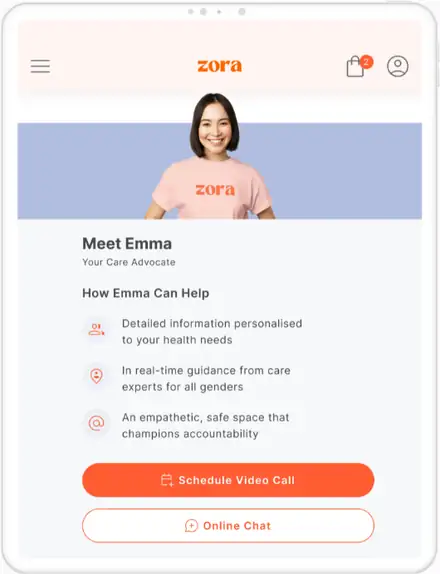
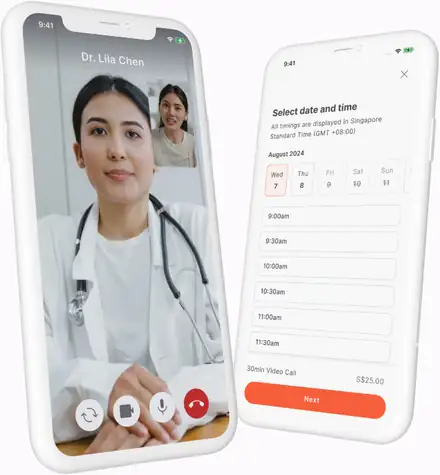
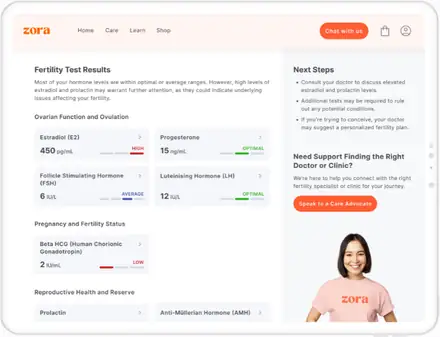
Employees join the Zora app with a company code, or single sign-on for larger teams. They can learn about fertility and egg freezing, understand what your benefit covers, book a confidential care navigation call and find partner clinics and specialists.
For HR
- Kick-off, week 1. Agree goals, countries and which employees are eligible.
- Policy and benefit design, weeks 2 to 4. Draft or update your fertility policy using our templates.
- Launch, typically weeks 4 to 6. A launch talk for employees and managers, plus a communications pack for HR to send.
- Live support. Employees book care navigation calls and use the Zora app.
- Reporting, every 3 months, on the Complete programme. Anonymised usage, common themes and our recommendations, reviewed with your account manager.
Privacy
Employee privacy is central to our programmes. On the Complete programme, routine employer reports contain aggregated engagement and utilisation information, with safeguards to prevent identification of individual employees. On every programme, personal health information is not included in standard HR reporting, and employees can get help without telling their manager. Where eligibility checks or claims administration need individual-level data, access is limited to authorised parties for defined purposes, as agreed in writing before launch. Employee data is handled in line with Singapore’s Personal Data Protection Act and Romania’s application of the EU General Data Protection Regulation (GDPR) and Law 190/2018, which treat health data as special category data.
Clinics and doctors in Romania
Zora’s clinic and doctor directory does not list providers in Romania yet. It lists 421 clinics and 1,185 doctors across 25 countries, mostly in Asia Pacific and the Middle East (browse clinics or browse doctors). Employees in Romania can still use Zora’s education and the Zora app. Ask us how your team in Romania would use Zora before you launch. See Zora’s employer guides for every country.
Rules and eligibility in Romania
Who can use assisted reproduction
Romania has no comprehensive law on assisted reproduction; clinics rely on general rules (Florian and Floare, 2025). The Civil Code allows donor treatment for a man and a woman or a single woman, with consent given before a notary; the donor has no legal tie to the child (e-juridic). In February 2026, USR senators began drafting a dedicated law on access, age limits and the status of the embryo (G4Media, February 2026).
Donor treatment allowed, surrogacy unregulated
The Civil Code voids acts that put a money value on the human body (Article 66), and the woman who gives birth is the legal mother (Article 408). Surrogacy is neither regulated nor expressly banned, and courts in Timișoara (2014) and Craiova (2016) have ruled differently (Sztranyiczki and Colţea, 2021).
Available privately, for medical or personal reasons
Private clinics freeze eggs before cancer treatment and electively (MedLife); we found no statutory age or storage limit. The state vouchers fund IVF only with a medical indication (programme rules).
IVF, maternity, paternity and parental leave
Article 147¹, added by Emergency Ordinance 26/2019 and unchanged as of November 2026, requires a specialist’s letter for the 3 days of IVF leave (Labour Code). Maternity leave is 126 calendar days (42 after birth compulsory), paid by health insurance at 85% of average gross income (Capital, April 2026). Since August 2022, fathers with an employment contract get 10 working days of paid paternity leave, plus 5 with a childcare course (Emergency Ordinance 117/2022). Child-raising leave runs until the child turns 2 (3 if disabled), at 85% of average net income (RON 1,651 to 8,500 a month in 2026), with 2 months reserved for the other parent (Alba24, September 2026).
Discrimination and flexible work
Hiring, pay and promotion may not depend on pregnancy, family plans or marital status, and a pregnant employee who has told her employer in writing is protected from dismissal, with exceptions that include serious misconduct and the employer’s bankruptcy or dissolution, and gets up to 16 paid hours a month for prenatal checks (avocatnet.ro, March 2026; avocatnet.ro, August 2026). Since October 2022, employees can request flexible work and employers must explain a refusal in writing within 5 days; carer’s leave is 5 working days a year (NNDKP, Law 283/2022).
Why employers choose Zora
Companies including Hilton, LinkedIn, Sanofi, HSBC, Mastercard, Carousell and Singapore Management University work with Zora Health. We work alongside your existing insurance, helping employees use the cover they already have and find suitable specialists based on their needs.
Trying to conceive with a heavy workload took a toll on my husband and me. It helped us understand our options.
Questions HR teams ask us
Is fertility leave mandatory in Romania?
Yes, in a limited form. Since 2019, Article 147¹ of the Labour Code has given female employees having IVF 3 extra days of paid leave a year: 1 day on the day of egg retrieval and 2 days from embryo transfer, on request with a letter from the specialist. The law does not cover other appointments or the employee’s partner, so many employers add their own days.
Does the state pay for IVF in Romania?
Partly. The national programme for 2026 to 2030, run by the Ministry of Labour, Family, Youth and Social Solidarity, gives RON 15,000 in digital vouchers: RON 10,000 for procedures and RON 5,000 for drugs. Couples (married or not) and single women can apply if the woman is 24 to 42, at least one partner is a Romanian citizen with domicile in Romania and both are insured. Support can be granted up to 3 times, within each year’s funds. Bucharest City Hall runs its own programme, and Bucharest Sector 2 proposed one in 2026.
Can employees freeze their eggs in Romania?
Yes. Private clinics freeze eggs before cancer treatment and for personal reasons, and we found no statutory age limit. One large provider lists retrieval and freezing at RON 12,200, or RON 8,120 before cancer treatment, plus RON 1,760 a year for storage and the cost of drugs. The state vouchers fund IVF with a medical indication, so elective freezing is usually paid privately.
Does Zora replace our health insurance?
No. Zora works alongside your insurance. We help employees understand their options, find suitable specialists and use the cover they already have.
How much does a fertility benefit cost an employer?
It depends on the allowance, eligibility and expected uptake. Use the budget planner on this page for a first estimate, then ask us for a tailored proposal based on your headcount and countries.
How quickly can we launch?
Typically 4 to 6 weeks from contract to launch, depending on scope and countries. Most companies start with a single talk.
Related guides for Romanian employers
Build a fertility benefit for your team
Whether you are introducing fertility benefits for the first time or improving an existing programme, tell us your headcount, countries and priorities. We will come back within two working days with suitable services, an indicative budget and a practical rollout plan for your Romanian team. No obligation.
Not ready to talk yet? Explore how Zora works
Sources
- G4Media, România are cea mai mare scădere a fertilității din Uniunea Europeană, citing Eurostat, May 2026
- Edupedu, România a avut în 2025 cei mai puțini nou-născuți, citing INS, May 2026
- G4Media, Asociațiile SOS Infertilitatea și Declic solicită reluarea finanțării programului FIV, April 2024
- Programul social de interes național de susținere a cuplurilor și a femeilor singure pentru creșterea natalității 2026 to 2030 (Government Decision 264/2026, Order 684/2026), copy published by România TV
- Stiri pe surse, Programul FIV 2026 începe pe 17 august, August 2026
- Digi24, Programul de fertilizare in vitro ar putea primi buget dublu în 2026, early 2026
- Puterea, Programul FIV primește 100 de milioane de lei, 30 September 2025
- Newsweek România, Înscrierea în programul FIV s-a finalizat, December 2025
- Agerpres, National IVF programme to be eligible for EU funding, November 2025
- National Transplant Agency, Subprogramul de fertilizare in vitro și embriotransfer, 2022
- Actual de Cluj, Guvernul oferă sprijin financiar de 15.000 de lei pentru fertilizarea in vitro, November 2022
- Stiri pe surse, ASSMB lansează proiectul FIV3, July 2025
- DGASPC Sector 2, Notă de fundamentare, Programul FIV pentru Sectorul 2, June 2026
- bucharest.ro, IVF in Bucharest 2026: three sources of funding, April 2026
- MedLife, Centrul de Fertilizare in Vitro, prețuri, 2026
- Emergency Ordinance 26/2019, Article IV (Labour Code Article 147¹), rubinian.com
- Capital, Concediul de maternitate 2026, April 2026
- Alba24, Indemnizația de creștere a copilului și stimulentul de inserție 2026, September 2026
- Fiscalitatea, OUG 117/2022: durata concediului paternal crește la 10 zile, August 2022
- NNDKP, Employment Flash 9/2022 (paternity leave)
- NNDKP, Employment Flash 10/2022 (Law 283/2022)
- avocatnet.ro, Luna femeii în 2026: drepturile salariatelor la locul de muncă, March 2026
- DLA Piper, Data Protection Laws of the World: Romania
- Florian and Floare, The Creative Use of Non-Specific Legal Provisions Regarding Assisted Reproduction in Romania, European Integration Studies, October 2025
- G4Media, USR inițiază elaborarea unei legi dedicate fertilizării in vitro, February 2026
- e-juridic, Ce prevede noul Cod civil referitor la reproducerea umană asistată medical
- Sztranyiczki and Colţea, Should Surrogacy Be Legally Regulated in Romania?, Acta Universitatis Sapientiae, Legal Studies, 2021
- Economedia, România printre ultimele țări din UE la ocuparea forței de muncă, citing Eurostat, April 2026
- Economedia, Costurile medicale din România ar urma să crească cu 15% în 2026, citing Aon, October 2025
- Revista Cariere, Leadership cu impact (Merck România), November 2024
- Financial Intelligence, Kellogg România oferă zile libere plătite pentru tratamente FIV, April 2022
- Deutsches IVF-Register, Jahrbuch 2024, edition for couples
- Labour Code, Title III, Chapter III, Section 1 (Article 147¹), consolidated to 4 November 2026, rubinian.com
- Digi24, Guvernul a aprobat programul fertilizare in vitro pentru 2026 to 2030, April 2026
- Adevărul, Primăria Sectorului 2 continuă programul FIV, July 2026
- Wall-Street.ro, PMB extinde Proiectul FIV3 cu 100 de locuri, October 2025
- avocatnet.ro, Concedierea în 2026: În ce situații nu au voie angajatorii să te dea afară, August 2026
- Ferring Pharmaceuticals, Fertility Matters at Work and This Can Happen, workplace fertility survey, November 2025
- Carrot Fertility, Global Fertility at Work report, 2023
- Gallup, This fixable problem costs US businesses $1 trillion, 2019
- World Health Organization, 1 in 6 people globally affected by infertility, April 2023
Information on this page is correct as of 5 November 2026. Laws, public funding, insurance rules and treatment costs change often, so check current rules with the relevant authority, insurer or a qualified adviser before making decisions. This page is general information, not legal, financial, tax or medical advice.