
Zora Health / Employer guide / Vietnam
Support employees through fertility treatment, and keep the talent you have invested in.
Fertility treatment rarely fits around a work calendar, and most employees go through it quietly, often while doing some of their best work. Zora Health helps you build practical fertility support, from policies and manager guidance to confidential care navigation and access to 128+ partner clinics in 16 countries, around your workforce and budget. Companies including Hilton, LinkedIn, Sanofi, HSBC, Mastercard, Carousell and Singapore Management University work with us.
Book an employer consultation Explore the cost calculator
Five things Vietnam HR leaders should know
- Social health insurance does not pay for IVF in Vietnam, so employees fund treatment themselves. A single cycle costs about VND 70 to 100 million, and more for complex cases.
- An older state research project cited by the Ministry of Health found 7.7% of couples need medical help to conceive, more than 1 million couples, and specialists said in August 2026 the current share is likely higher. Vietnam’s total fertility rate was 1.93 children per woman in 2025, below the replacement level of about 2.1.
- Since 1 October 2025, Decree 207/2025/ND-CP allows single women to use IVF without a doctor’s recommendation, and legal and press summaries report they may also freeze eggs without a medical reason. Surrogacy remains altruistic only and limited to close relatives.
- Maternity leave is 6 months, and 7 months for a second child born from 1 July 2026. Fathers get 5 to 14 working days, and 10 days for a natural birth of a second child. There is no dedicated fertility treatment leave.
- Aon projects gross medical costs in Vietnam to rise 12.2% in 2026, so a fixed annual or lifetime allowance keeps a fertility budget predictable.
Why fertility is a business problem for employers
Fertility treatment does not fit around a work calendar. A clinic sets the date of a scan the day before. Egg collection happens when the body is ready, usually about 36 hours after a final trigger injection. Then comes a two-week wait, and for many couples, another cycle. Your team feels it: missed meetings, unexplained absences, a strong performer who suddenly goes quiet.
No published Vietnamese survey measures how many employees hide fertility treatment from their employer. A Ferring and Ipsos survey of more than 1,465 fertility patients in 7 Asian markets including Vietnam (published November 2023) found respondents had spent an average of 6.8 years trying to conceive, but it gave no Vietnam-only or workplace figures.
- Resignations. In a 2025 Ferring survey of more than 3,600 employees and employers in Australia, France, Japan, Poland and the UK, 39% of employees with fertility challenges had left or were considering leaving their job during treatment.
- Lower performance. In Carrot’s 2023 survey of 5,000 people in Canada, India, Mexico, the UK and the US, 55% said fertility challenges hurt their work performance.
- Savings drained. VnExpress reported in 2023 on a couple who spent VND 500 million on treatment over four years, with no insurance support.
- Unequal access. Because insurance pays nothing toward IVF, access depends on savings. Single women gained access to IVF in October 2025 under Decree 207/2025/ND-CP and pay the same full price.
What employers gain
Keep the people you spent the most to develop
Replacing an employee costs one-half to two times their annual salary, according to Gallup. Around half of Vietnamese couples with infertility are under 30, according to experts quoted by Viet Nam News in 2024, so treatment often overlaps with the early years of a career. A written policy, paid time off and a funded allowance can help address barriers that contribute to employee attrition.
Stand out in a tight labour market
In Ferring’s 2025 survey, 73% of people with fertility challenges said they would be attracted to a role that offers fertility support, and 65% of Carrot’s 2023 respondents said they would switch to an employer that offers fertility benefits. Women’s labour force participation in Vietnam was 68.6% in 2025, against 77.3% for men (World Bank, modelled ILO estimates).
Make fertility support financially predictable
Aon projects gross medical costs in Vietnam to rise 12.2% in 2026 and 9.9% in 2027, and WTW projects 12.3% for 2026. A capped allowance with defined eligible treatments gives finance a fixed number.
Zora helps employers structure benefits around local treatment costs, from public hospital fees at Tu Du and Hung Vuong to private packages in Hanoi and Ho Chi Minh City, so HR can run the programme within an agreed budget.
Want to see what this would look like for your Vietnam workforce?
What IVF costs, and what the state pays
Vietnam has no national IVF price list. Public hospitals charge less than private centres, drugs are often billed separately, and the final cost depends on age, diagnosis and the number of embryos.
| Treatment | Typical cost | Notes |
|---|---|---|
| IVF cycle, national range | VND 70 to 100 million | Rises with the complexity of the cause (Viet Nam News, August 2026) |
| IVF, Tu Du Hospital (public) | VND 60 to 70 million, excluding drugs | Listed basic cycle price, 2025 (Docosan) |
| IVF, Tu Du Hospital study | VND 59.3 million average direct medical cost | 418 couples, stimulation to embryo creation, 2020 to 2021 (Pham Ngoc Thach Journal of Medicine and Pharmacy, 2022) |
| IVF, Hung Vuong Hospital (public) | About VND 21.1 million service fee plus VND 36.9 to 47.4 million for stimulation drugs | Embryo freezing VND 8.4 to 10.5 million (Docosan) |
| IVF, private centres | VND 80 to 105 million (conventional IVF, Hong Ngoc); VND 140 to 200 million (packages, Phuong Chau Saigon) | Package contents vary (Docosan) |
Hospital prices are from Docosan, a booking platform, August 2025; confirm with each clinic. The Tu Du study figure is from 2020 to 2021 and likely understates current prices. No reliable all-in price for elective egg freezing was found.
| Item | Public support (or own savings) | What the employee still carries |
|---|---|---|
| IVF and IUI | None from social health insurance (VnExpress, 2023; cover still proposed in August 2026) | The full cost of every cycle |
| Elective egg freezing | None. Own savings only (not a subsidy) | Stimulation, retrieval, freezing and yearly storage |
| Maternity leave pay | Social insurance pays 100% of average insured salary for 6 months (7 for a second child born from 1 July 2026), plus a lump sum of twice the base salary (Vietnam Law Magazine; Lockton) | Treatment costs before pregnancy are not covered |
| Childbirth payment | From 1 January 2027, at least VND 2 million for women in three eligible groups, including women who have two children before age 35 (Vietnam Law Magazine, May 2026) | Paid after birth, unrelated to treatment cost |
Social insurance maternity pay depends on at least 6 months of contributions in the 12 months before birth. No personal income tax relief specific to fertility treatment was found.
Age is one of the strongest predictors of IVF success, alongside individual medical and treatment factors. Vietnam publishes no national registry of IVF results by age. As a single clinician’s estimate, not registry data, a Hanoi hospital doctor quoted by Znews in August 2025 estimated success at about 70% for women under 30, about 30% at 35 to 38 and under 5% over 42, without saying whether these are pregnancy or live birth rates.
Insurance pays nothing toward any cycle, and some couples need several, which is why the size of an allowance, and when employees can use it, matter as much as whether you offer one.
Give Employees Access to Fertility Specialists Across Asia
Help employees navigate fertility care with access to doctors and clinics, treatment information, and clear guidance on IVF, egg freezing and other fertility options. Employees can explore their options privately, without needing to go through HR.
Fertility clinics in Vietnam on the Zora app include IVFMD, My Duc Hospital, Andrology and Fertility Hospital of Hanoi and Hanh Phuc International Hospital.
Fertility support that fits your workforce and budget
You do not need to overhaul your existing health insurance to support employees through fertility treatment. Start with awareness and manager education, add confidential one-to-one support, or introduce a funded allowance across your offices. There is no minimum company size.
Where included in the employer programme, eligible employees can use talks and care navigation without paying Zora a separate fee. Care navigation allowances are set in each proposal. Treatment and other third-party costs are paid separately, either by employees or through the fertility allowance their employer provides.
Companies starting the conversation
Essentials
Expert-led talks for employees and managers, fertility and menopause policy templates, manager guides and full access to the Zora app. Up to 2 talks a year.
Employees supported one to one
Navigation
Everything in Essentials, plus confidential one-to-one care navigation and access to our partner clinic network.
Large teams across Asia
Complete
Everything in Navigation, plus quarterly anonymised reporting, a dedicated account manager and scheduled review meetings with HR.
Optional add-ons can be added to any programme, subject to availability: hormone and fertility diagnostics and telehealth with specialists. Pricing is tailored to your headcount, your countries and the services you choose. Most companies start with a single talk.
Request a proposal See how Zora works for employers
Comparing fertility benefit providers? Use our RFP question bank
Most RFP templates were written for the US. Ours has 40 questions written for Asia, with why each one matters, what a good answer looks like and a scoring sheet for three providers. Six of the questions for Vietnam:
- Which clinics can employees use in Ho Chi Minh City, Hanoi and other cities, including public hospitals such as Tu Du and Hung Vuong?
- Are local-plan employees covered, or only staff on international health plans?
- Can single employees use the benefit for IVF and egg freezing, in line with Decree 207/2025/ND-CP?
- How does the allowance work alongside social insurance maternity benefits, given that health insurance does not pay for IVF?
- Do you require an infertility diagnosis before support starts?
- How is health data handled under Vietnam’s Personal Data Protection Law and Decree 356/2025/ND-CP, and what does HR see?
Your download link appears here as soon as you submit. Zora Health may contact you about employee benefits; see our privacy policy.
Plan your fertility benefit budget
Fertility benefit budget planner
Model the annual claims budget for a fertility allowance. Change any number.
This is a claims budget, not a Zora quotation. Zora’s programme fees, implementation and optional services are separate.
Illustration only. Utilisation is an editable assumption, not observed Zora data. The calculation assumes each user claims their full annual allowance, and excludes programme fees and setup costs. For a tailored model, request an employer proposal.
Estimate the potential workforce impact of fertility challenges
A rough planning scenario. It applies a global infertility estimate to your headcount, so it is not a prediction for your workforce, a measured loss or a forecast of savings from any programme.
Range: VND 1,353,000,000 to VND 3,828,000,000 a year, depending on replacement cost.
Assumptions: infertility affects about 1 in 6 adults (World Health Organization, 2023), applied to employees aged 25 to 44. Replacing an employee costs one-half to two times their annual salary (Gallup, 2019); the headline uses the low end. Absence is valued at salary divided by 250 working days. Exit rate and days lost are your own assumptions.
This is a hypothetical cost scenario, not a prediction of actual employee departures, an estimate of Zora’s financial impact or a guaranteed saving from fertility benefits.
Already have corporate health insurance? Here is where Zora fits
Your medical plan may cover some consultations and tests, but fertility treatment is often limited or excluded, so check your policy wording. Employees still need to understand their options, the public funding they qualify for and which clinic suits them.
Zora works alongside your existing insurance and benefits. We help employees get reliable information, navigate their care options and reach suitable specialists, and we give HR manager guidance, policy templates and, on the Complete programme, anonymised reporting. You strengthen fertility support without replacing your medical plan.
How Zora works
For your employees
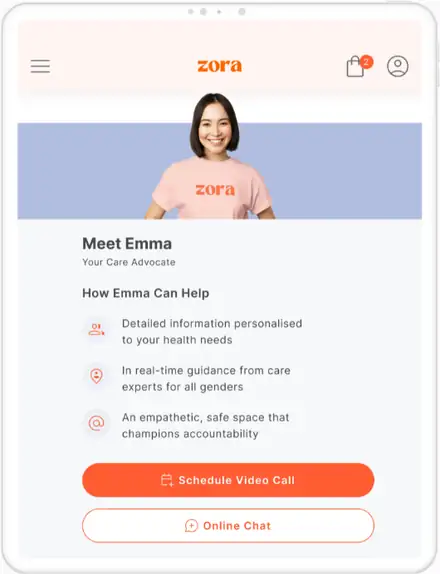
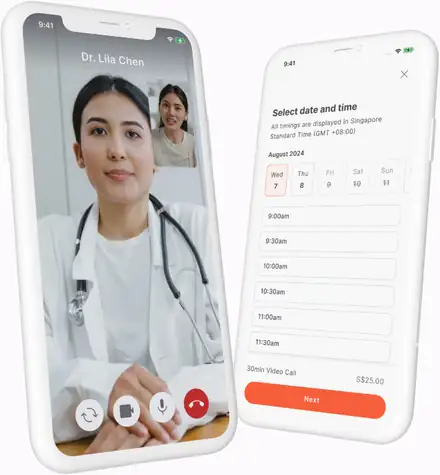
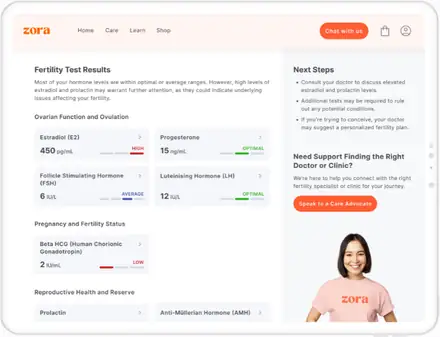
Employees join the Zora app with a company code, or single sign-on for larger teams. They can learn about fertility and egg freezing, understand what your benefit covers, book a confidential care navigation call and find partner clinics and specialists.
For HR
- Kick-off, week 1. Agree goals, countries and which employees are eligible.
- Policy and benefit design, weeks 2 to 4. Draft or update your fertility policy using our templates.
- Launch, typically weeks 4 to 6. A launch talk for employees and managers, plus a communications pack for HR to send.
- Live support. Employees book care navigation calls and use the Zora app.
- Reporting, every 3 months, on the Complete programme. Anonymised usage, common themes and our recommendations, reviewed with your account manager.
Privacy
Employee privacy is central to our programmes. On the Complete programme, routine employer reports contain aggregated engagement and utilisation information, with safeguards to prevent identification of individual employees. On every programme, personal health information is not included in standard HR reporting, and employees can get help without telling their manager. Where eligibility checks or claims administration need individual-level data, access is limited to authorised parties for defined purposes, as agreed in writing before launch. Employee data is handled in line with Singapore’s Personal Data Protection Act and Vietnam’s Personal Data Protection Law (Law No. 91/2025/QH15), which treats health information as sensitive personal data.
Clinics and doctors in Vietnam
Zora’s directory lists 6 clinics and 61 doctors in Vietnam. Locations include Ho Chi Minh City, Hanoi and Thuận An. Of these clinics, 5 list IVF and 2 list egg freezing.
Employees can browse clinics in Vietnam, see IVF clinics and find a doctor in Vietnam on the Zora app. The directory is for information only and is not an endorsement. See Zora’s employer guides for every country.
Rules and eligibility in Vietnam
Who can use assisted reproduction
Assisted reproduction is permitted for infertile couples, people with a medical indication and single women who want a child. Single women no longer need a specialist’s recommendation (LuatVietnam), and a single woman without usable eggs may receive donated embryos. Donated sperm, eggs or embryos may be used for only one woman or one couple, and sperm and embryo donation is anonymous. The decree replaced Decree 10/2015/ND-CP and Decree 98/2016/ND-CP (Decree 207/2025/ND-CP, LuatVietnam).
Freezing allowed; surrogacy only within the family
Eggs, sperm and embryos may be stored only at licensed IVF facilities or tissue banks, under a paid storage contract. VnExpress and LuatVietnam report that since October 2025 single women may freeze eggs without a medical reason; confirm the clinic’s practice before funding elective freezing. The decree sets no fixed maximum storage period, and a facility may destroy samples if fees go unpaid for 6 months. Surrogacy is permitted only for humanitarian purposes under the 2014 Law on Marriage and Family: the intended parents must be a married couple where the wife cannot carry a pregnancy, and under Decree 207/2025/ND-CP the surrogate must be a close blood relative of the husband or wife who has given birth before. Commercial surrogacy is prohibited (Vietnam Law Magazine, 2026).
Maternity, paternity and treatment-related leave
Insured mothers get 6 months of maternity leave at 100% of average insured salary. Insured fathers get 5 to 14 working days, depending on the type of birth, taken within 60 days (Vietnam Law Magazine). Women with at least 12 months of contributions who took time off for infertility treatment qualify for maternity pay with 6 months of contributions in the 24 months before birth (Crowe Vietnam). There is no dedicated paid leave for IVF appointments or procedures.
Discrimination, dismissal and health data
The Labour Code defines discrimination to include grounds of gender, pregnancy and marital status, prohibits it, and bars employers from unilaterally terminating a female employee who is pregnant, on maternity leave or raising a child under 12 months (Labour Code No. 45/2019/QH14). From 1 January 2026, the Personal Data Protection Law (Law 91/2025/QH15) treats health information as sensitive personal data, and its implementing Decree 356/2025/ND-CP, in force from the same date, replaced Decree 13/2023/ND-CP (DLA Piper).
New support for second children
Second-child maternity leave rises to 7 months, and fathers get 10 working days for a natural birth of a second child (Lockton). Decree 168/2026/ND-CP adds a payment of at least VND 2 million for women in three groups, including women who have two children before age 35. The payment applies from 1 January 2027 (Government of Vietnam, May 2026; Vietnam Law Magazine). The law does not add funding for IVF.
Why employers choose Zora
Companies including Hilton, LinkedIn, Sanofi, HSBC, Mastercard, Carousell and Singapore Management University work with Zora Health. We work alongside your existing insurance, helping employees use the cover they already have and find suitable specialists based on their needs.
Trying to conceive with a heavy workload took a toll on my husband and me. It helped us understand our options.
Questions HR teams ask us
Is fertility leave mandatory in Vietnam?
No. Vietnamese law has no dedicated paid leave for IVF appointments or procedures. The 2024 Law on Social Insurance only counts time off for infertility treatment when it assesses eligibility for maternity benefits. Employees usually use annual leave, sick leave or unpaid leave unless the employer offers more.
Does health insurance cover IVF in Vietnam?
No. Social health insurance does not pay for IVF or IUI, and specialists were still calling for cover in August 2026. Employees pay in full unless their employer helps. Social insurance does pay maternity benefits once an insured employee gives birth.
Can single employees freeze eggs or use IVF in Vietnam?
Yes. Since 1 October 2025, Decree 207/2025/ND-CP allows single women to use IVF without a doctor’s recommendation, and legal and press summaries report they may freeze eggs without a medical reason. Single women without usable eggs may receive donated embryos. Surrogacy remains limited to married couples and family members acting altruistically.
Does Zora replace our health insurance?
No. Zora works alongside your insurance. We help employees understand their options, find suitable specialists and use the cover they already have.
How much does a fertility benefit cost an employer?
It depends on the allowance, eligibility and expected uptake. Use the budget planner on this page for a first estimate, then ask us for a tailored proposal based on your headcount and countries.
How quickly can we launch?
Typically 4 to 6 weeks from contract to launch, depending on scope and countries. Most companies start with a single talk.
Related guides for Vietnam employers
Build a fertility benefit for your team
Whether you are introducing fertility benefits for the first time or improving an existing programme, tell us your headcount, countries and priorities. We will come back within two working days with suitable services, an indicative budget and a practical rollout plan for your Vietnam team. No obligation.
Not ready to talk yet? Explore how Zora works
Sources
- Government of Vietnam, Viet Nam’s working-age population accounts for almost 63%, January 2026
- Viet Nam News, report on rising infertility rates and calls for insurance coverage, September 2024
- Viet Nam News, Health expert proposes health insurance coverage for infertility treatment, August 2026
- VnExpress International, Couples drain savings to treat infertility, August 2023
- VnExpress International, Vietnam’s new policy lets single women freeze eggs, July 2025
- Pham Ngoc Thach Journal of Medicine and Pharmacy, Direct medical costs of ovarian stimulation and embryo creation in IVF at Tu Du Hospital, 2022
- Docosan (booking platform), IVF cost in Vietnam (2025), August 2025
- Znews, IVF success rates and costs (one doctor’s estimates), August 2025
- Decree 207/2025/ND-CP on assisted reproductive technology and altruistic surrogacy, LuatVietnam
- LuatVietnam, Vietnam grants single women full access to IVF, August 2025
- Vietnam Law Magazine, Vietnam’s law on surrogacy and some recommendations, April 2026
- Vietnam Law Magazine, Maternity entitlements under the 2024 Law on Social Insurance, September 2025
- Crowe Vietnam, Key updates of the 2024 Social Insurance Law
- Lockton, Vietnam extends maternity and paternity leave for employees welcoming a second child, July 2026
- Vietnam Law Magazine, Women having two children before 35 eligible for State support from 2027, May 2026
- Government of Vietnam, Govt decrees financial support to boost fertility rate, May 2026
- Labour Code No. 45/2019/QH14, LuatVietnam
- DLA Piper, Data protection laws of the world: Vietnam
- Aon, APAC medical cost growth projected to slow to 9.7% in 2027, October 2026
- WTW, Double-digit medical cost increases projected to persist into 2026 in Asia Pacific, November 2025
- World Bank, Labor force participation rate, female, Viet Nam (modelled ILO estimate)
- World Bank, Labor force participation rate, male, Viet Nam (modelled ILO estimate)
- Ferring and Ipsos, Asia infertility patient survey, November 2023
- Ferring Pharmaceuticals, Fertility Matters at Work and This Can Happen, workplace fertility survey, November 2025
- Carrot Fertility, Global Fertility at Work report, 2023
- Gallup, This fixable problem costs US businesses $1 trillion, 2019
- World Health Organization, 1 in 6 people globally affected by infertility, April 2023
Information on this page is correct as of 5 November 2026. Laws, public funding, insurance rules and treatment costs change often, so check current rules with the relevant authority, insurer or a qualified adviser before making decisions. This page is general information, not legal, financial, tax or medical advice.