
Zora Health / Employer guide / Singapore
Support your experienced employees through menopause, and help them stay at their best.
Poor sleep, fatigue and brain fog can hit your most experienced employees at the height of their careers, yet many never seek treatment or tell their manager. Zora Health helps you build practical menopause support, from workplace policies and manager training to confidential care navigation and access to 128+ partner clinics in 16 countries, around your workforce and budget. Companies including Hilton, LinkedIn, Sanofi, HSBC, Mastercard, Carousell and Singapore Management University work with us.
Book an employer consultation Explore the cost calculator
Five things Singapore HR leaders should know
- The average age of menopause in Singapore is 49, and perimenopause symptoms can start up to 10 years earlier. For many women that is the decade they reach their most senior roles.
- In a 2025 KK Women’s and Children’s Hospital study of 1,461 women aged 45 to 65, 70% had moderate to severe symptoms, and 70% of those had not seen a doctor about them.
- The most common symptoms here are joint and muscle aches, poor sleep and exhaustion. Hot flushes come fifth, so many women and managers never connect the dots.
- There is no statutory menopause leave or policy requirement, but formal flexible work requests must be considered and answered in writing within two months.
- Only 1 in 10 working women in a 2026 survey said their workplace was open to discussing menopause support.
Why menopause is a business problem for employers
Menopause rarely announces itself at work. It looks like a senior manager who sleeps four hours a night, aching knees on the walk to a 9am meeting, a word that will not come in front of a client. Symptoms come and go for years. Many women in Singapore do not link them to menopause, and fewer tell their manager.
So the cost stays out of your reports. It shows up instead as:
- Resignations and reduced hours. More than a third of respondents in the NUS Medicine and HeyVenus study of 1,741 people across five Asia Pacific countries said symptoms influenced decisions to change roles, cut their hours or consider early retirement (AWARE and HeyVenus, December 2025).
- Lower performance. Nearly half of women in the same study reported significant disruption to their work, including fatigue, forgetfulness and difficulty concentrating (NUS Medicine and HeyVenus, 2025). In Singapore, 74% of women aged 45 and over with at least two symptoms said menopause interfered with their ability to do their job (NUS Medicine and HeyVenus, via CNA Women). In a 2026 survey of 2,375 working women by the PAP Women’s Wing and NTUC Women and Family, 61% of those with symptoms said low energy and fatigue had the biggest effect on their work or well-being.
- Senior talent at risk. More than half of the Singapore women whose symptoms affect their work and quality of life are in middle to senior leadership roles. Yet 66% say social stigma stops them talking about symptoms and asking for support at work (NUS Medicine and HeyVenus, via CNA Women).
- Unequal access. Subsidised specialist care needs a polyclinic or GP referral and is for citizens and permanent residents. Employees on work passes pay non-resident rates for the same appointment.
What employers gain
Keep the people who know how your business runs
Replacing an employee costs one-half to two times their annual salary, according to Gallup. Women aged 25 to 64 in Singapore had a labour force participation rate of 80.5% in 2025, up from 74.1% in 2015 (Ministry of Manpower), so more of your experienced women will work through menopause. A written policy, trained managers and quick access to the right doctor can help address barriers that contribute to employee attrition.
Stand out to experienced women
In Singapore, 71% of female employees and 68% of people managers say a menopause-friendly policy would benefit their organisation, yet only 31% of companies have one (NUS Medicine and HeyVenus). In Mercer’s survey of 5,200 employees across Asia, 54% said it is important for their employer to support women’s issues. Some Singapore employers have moved already: Standard Chartered added menopause treatment to its medical cover in 2023, and HSBC Singapore covers menopause consultations and treatment (CNA Women).
Make menopause support financially predictable
Much of what helps costs very little: a flexible start time, a desk fan, a manager who knows what to say. The medical side is mostly outpatient care, such as a GP or specialist review and, where suitable, hormone therapy.
Zora helps employers set an annual allowance or outpatient top-up around local consultation costs and public subsidies, so HR can run the programme within an agreed budget. The benefit works alongside your existing insurance and the subsidised care your employees may already qualify for.
Want to see what this would look like for your Singapore workforce?
What menopause care costs, and what the state pays
Most menopause care in Singapore is outpatient: a GP or polyclinic visit, a referral to a specialist if needed, and medication. Subsidies depend on residency and on being referred through the public system.
| Item | Public support | What the employee still carries |
|---|---|---|
| Polyclinic visit | Subsidised for citizens and permanent residents: S$19.60 for an adult citizen and S$43.50 for a permanent resident at National University Polyclinics | Non-residents pay S$83.71 for the same visit |
| Specialist clinic, such as the KK Menopause Centre | Subsidised with a polyclinic or GP referral: S$37.20 to S$98.54 a visit for citizens at KKH | Private-rate patients pay from S$208.84 for a first visit with a senior consultant |
| Menopause hormone therapy | Subsidised for Singaporeans referred to a public specialist clinic and assessed as needing it | Work pass holders and private patients pay in full |
| Time off for appointments | No statutory menopause leave | Sick leave with a medical certificate, annual leave or a flexible work request |
Fees as published by National University Polyclinics (from 1 September 2026) and KK Women’s and Children’s Hospital, including GST where charged; subsidy levels vary by patient eligibility. These are published examples, not guaranteed current prices: actual costs depend on residency, referral route, subsidy eligibility, clinic, doctor and treatment, so confirm fees with the provider before budgeting. Hormone therapy subsidy: Ministry of Health, Parliamentary reply, 7 February 2024.
Most women with moderate to severe symptoms have not seen a doctor. In KKH’s 2025 study, 70% of the 1,022 women with moderate to severe symptoms had not sought medical attention, and 90% of 262 healthcare professionals surveyed were not very confident diagnosing and treating menopause.
Singapore’s first national menopause management guidelines, launched by KKH in February 2026, state that for most women with symptoms who are under 60 or within 10 years of menopause and can safely use hormone therapy, the benefits significantly outweigh the risks. For employers, the practical opportunity is to help employees recognise their symptoms, understand their options and reach appropriate clinical advice sooner.
Menopause support that fits your workforce and budget
You do not need to overhaul your existing health insurance to support employees through menopause. Start with awareness and manager education, add confidential one-to-one support, or introduce a fuller programme across your offices. There is no minimum company size.
Where included in the employer programme, eligible employees can use talks and care navigation without paying Zora a separate fee. Care navigation allowances are set in each proposal. Treatment and other third-party costs are paid separately, either by employees or through the allowance their employer provides.
Companies starting the conversation
Essentials
Expert-led talks for employees and managers, menopause policy templates, manager guides and full access to the Zora app. Up to 2 talks a year.
Employees supported one to one
Navigation
Everything in Essentials, plus confidential one-to-one care navigation and access to our partner clinic network.
Large teams across Asia
Complete
Everything in Navigation, plus quarterly anonymised reporting, a dedicated account manager and scheduled review meetings with HR.
Optional add-ons can be added to any programme, subject to availability: hormone diagnostics and telehealth with specialists. Pricing is tailored to your headcount, your countries and the services you choose. Most companies start with a single talk.
Request a proposal See how Zora works for employers
Comparing menopause benefit providers? Use our RFP question bank
Most RFP templates were written for the US. Ours has 40 questions written for Asia, with why each one matters, what a good answer looks like and a scoring sheet for three providers. Six of the questions for menopause support in Singapore:
- Is menopause support included as standard, or only fertility?
- What access do employees get to menopause specialists and hormone testing, and how quickly?
- How does the programme support flexible work requests linked to menopause under the Tripartite Guidelines in Singapore?
- Do you provide fertility and menopause policy templates for our markets?
- How can an employee get help confidentially without telling their manager?
- What individual-level data does HR see?
Your download link appears as soon as you submit. Zora Health may contact you about employee benefits; see our privacy policy.
Plan your menopause benefit budget
Menopause care allowance planner
Model the annual claims budget for a menopause care allowance. Change any number.
This is a claims budget, not a Zora quotation. Zora’s programme fees, implementation and optional services are separate.
It estimates the annual budget for a menopause care allowance from your eligible workforce, expected utilisation and allowance per employee, and assumes each user claims the full allowance. Eligible employees defaults to 15% as a stand-in for women aged 45 and over; use your own headcount data. Utilisation is an editable assumption, not observed Zora data. For a proposal covering both programme costs and employee benefits, request an employer proposal.
Estimate the potential workforce impact of menopause symptoms
A rough planning scenario. It applies a published estimate to your headcount, so it is not a prediction for your workforce, a measured loss or a forecast of savings from any programme.
Range: S$44,622 to S$135,072 a year, depending on replacement cost.
Assumptions: 13.4% of working women aged 45 to 60 reported at least one adverse work outcome due to menopause symptoms, and those who missed work lost a median of 3 days a year (Faubion et al., Mayo Clinic Proceedings, 2023). This was a US clinic sample, so treat it as a rough benchmark for Singapore. Replacing an employee costs one-half to two times their annual salary (Gallup, 2019); the headline uses the low end. Absence is valued at salary divided by 250 working days. Exit rate is your own assumption.
Already have corporate health insurance? Here is where Zora fits
Your medical plan may cover some consultations and treatment. Employees still need to recognise their symptoms, understand their options and find a doctor who knows menopause care, and many never get that far.
Zora works alongside your existing insurance and benefits. We help employees get reliable information, navigate their care options and reach suitable specialists, and we give HR manager training, policy templates and, on the Complete programme, anonymised reporting. You strengthen menopause support without replacing your medical plan.
How Zora works
For your employees
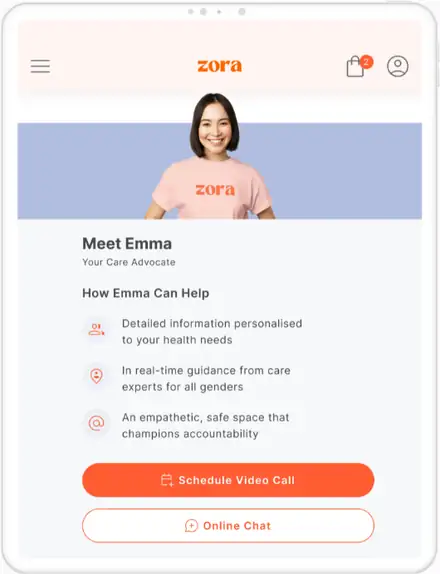
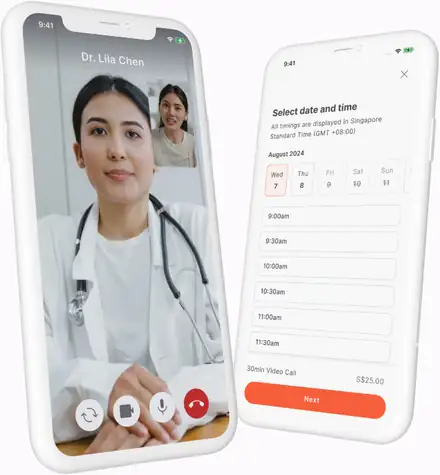
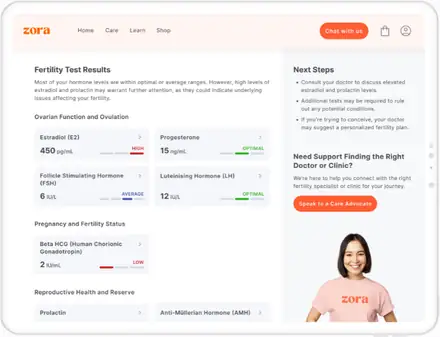
Employees join the Zora app with a company code, or single sign-on for larger teams. They can learn about perimenopause and menopause, understand what your benefit covers, book a confidential care navigation call and find partner doctors and specialists.
For HR
- Kick-off, week 1. Agree goals, countries and which employees are eligible.
- Policy and benefit design, weeks 2 to 4. Draft or update your menopause policy and flexible work guidance using our templates.
- Launch, typically weeks 4 to 6. A launch talk for employees and managers, plus a communications pack for HR to send.
- Live support. Employees book care navigation calls and use the Zora app.
- Reporting, every 3 months, on the Complete programme. Anonymised usage, common themes and our recommendations, reviewed with your account manager.
Privacy
On the Complete programme, HR receives anonymised, aggregated reports only: how many employees used the programme, which services they used and the common themes. On every programme, HR never sees an individual employee’s health information, bookings or test results, and employees can get help without telling their manager. Employee data is stored on Amazon Web Services in Singapore and handled in line with Singapore’s Personal Data Protection Act.
Getting Care in Singapore with Zora
Employees in Singapore can start with a confidential consultation with a Zora care navigator, who helps them understand their menopause and reproductive health options, navigate their employer’s benefits, and identify suitable doctors or specialists.
Employees can book consultations through the Zora app, with optional specialist video consultations depending on their employer’s programme. Personal health discussions remain confidential and are not shared with their employer.
Rules and eligibility in Singapore
Flexible work requests
Under the Tripartite Guidelines on Flexible Work Arrangement Requests, employers must have a process for formal requests from employees who have completed probation, consider each one properly and reply in writing within two months, with reasons for any refusal. These are guidelines, not legislation. Where an employer wilfully refuses to follow them, MOM may issue a warning and require corrective workshops (MOM). For most HR teams, this is the first place menopause shows up.
Fair employment practices
Until the Workplace Fairness Act starts, the Tripartite Guidelines on Fair Employment Practices apply. They expect decisions on merit and a process for handling grievances, and MOM can curtail an employer’s work pass privileges if it does not follow them (TAFEP).
Workplace Fairness Act
The Act protects characteristics including age, sex, disability and mental health conditions. Menopause is not named, so whether a decision linked to symptoms is covered will depend on the facts. Employers will need a written grievance process, and employers with fewer than 25 employees are exempt for the first five years. Discrimination claims under the Act go to the Employment Claims Tribunals up to S$250,000, and to the High Court above that. Base performance and promotion decisions on documented, job-related reasons now.
National menopause clinical guidelines
KKH’s Guidelines on Management of the Menopause Transition are clinical, not workplace rules. They give HR a credible reference for what good care looks like, including the local symptom pattern and the position on hormone therapy.
No statutory menopause leave
There is no menopause leave and no legal duty to have a menopause policy. In May 2026, AWARE recommended that MOM set out a framework for menopause-related workplace adjustments, and an NTUC Assistant Secretary-General called for clearer tripartite guidance in the February 2026 Budget debate (Mothership). We have found no government commitment to new rules yet.
Why employers choose Zora
Companies including Hilton, LinkedIn, Sanofi, HSBC, Mastercard, Carousell and Singapore Management University work with Zora Health. We work alongside your existing insurance, helping employees use the cover they already have and find suitable doctors and specialists based on their needs.
Zora Health helped me to reclaim my confidence to thrive at work!
Questions HR teams ask us
Do Singapore employers have to give menopause leave?
No. There is no statutory menopause leave in Singapore. Employees use sick leave with a medical certificate, annual leave or flexible work unless their employer offers more.
Can an employee ask for flexible work because of menopause symptoms?
Yes. Any employee who has finished probation can make a formal flexible work request for any reason. Under the Tripartite Guidelines, the employer should consider it properly and reply in writing within two months, with reasons if the answer is no.
Is menopause covered by the Workplace Fairness Act?
Not by name. The Act covers age, sex, disability and mental health conditions, among other characteristics, and some menopause-related situations may overlap with these. It is expected to take effect at the end of 2027.
Do foreign employees get subsidised menopause care?
Subsidised rates at polyclinics and public specialist clinics are for citizens and permanent residents. Employees on work passes pay non-resident rates, which is where an employer benefit makes the biggest difference.
What happens if an employer ignores the tripartite guidelines?
For flexible work requests, TAFEP will guide the employer to comply, and MOM may issue a warning and require corrective workshops for employers who wilfully refuse. For fair employment practices, MOM can curtail work pass privileges.
Does Zora replace our health insurance?
No. Zora works alongside your insurance. We help employees understand their options, find suitable specialists and use the cover they already have.
How much does menopause support cost an employer?
It depends on the programme, any allowance and expected uptake. Use the budget planner on this page for a first estimate, then ask us for a tailored proposal based on your headcount and countries.
How quickly can we launch?
Typically 4 to 6 weeks from contract to launch, depending on scope and countries. Most companies start with a single talk.
Related guides for Singapore employers
Build a menopause support programme for your team
Whether you are introducing menopause benefits for the first time or improving an existing programme, tell us your headcount, countries and priorities. We will come back within two working days with suitable services, an indicative budget and a practical rollout plan for your Singapore team. No obligation.
Sources
- SingHealth, KKH MCHRI launches Singapore’s first menopause management guidelines, 20 February 2026
- The Sunday Times via KKH, Is Singapore ready for the menopause wave from a super ageing society?, January 2024
- People Matters, PAP Women’s Wing and NTUC Women and Family, Women Across Life Stages survey, September 2026
- NUS Medicine and HeyVenus, menopause workplace study, April 2025
- AWARE and HeyVenus, Joint submission on reasonable accommodations for menopause, December 2025
- CNA Women via Tiger Brokers, Menopause in the workplace, 2025
- Ministry of Manpower, Labour Force in Singapore Advance Release 2025
- Mercer, Health on Demand 2023, via Human Resources Online
- Gallup, This fixable problem costs US businesses $1 trillion, 2019
- Mayo Clinic News Network, Faubion et al., Impact of menopause symptoms on women in the workplace, Mayo Clinic Proceedings, April 2023
- National University Polyclinics, Fees and charges, from 1 September 2026
- KK Women’s and Children’s Hospital, Outpatient charges
- Ministry of Health, Parliamentary reply on menopausal hormone treatment, 7 February 2024
- Ministry of Manpower, Flexible work arrangements
- Ministry of Manpower FAQ, How will the TG-FWAR be enforced?
- TAFEP, Tripartite Guidelines on Fair Employment Practices
- TAFEP, Workplace fairness legislation
- Herbert Smith Freehills Kramer, Workplace Fairness Act to take effect end of 2027, November 2025
- Jones Day via Legal 500, Singapore passes its first anti-discrimination law, February 2025
- AWARE, Recommendations to MOM for safer and fairer workplaces, 1 May 2026
- Mothership, Yeo Wan Ling on inclusive workplaces for women, February 2026